Expendable: The Enduring Life of
Wartime Ephemera
Design Director
Gary Mills
“The fame, therefore, of her virtue shall never die, and the immortals shall compose a song that shall be welcome to all mankind in honour of the constancy of Penelope.” Homer, The Odyssey

Figure 1: Original Cover of "His Service Record"
I embellished this volume's otherwise routine table of contents (TOC) structure by adding an image of a WWII artifact I’ve treasured for years, my Uncle Roy’s WWII scrap book. I had scanned and digitized the entire document following hours of interviews conducted during intermittent breaks across three days while visiting with Roy and Aunt Annie at their farm in July 2000. My original intent was to place this artful—simulated leather tooled floral patterns nestling military service insignias and colorful (red, white, and blue, light tan coloration is time’s patina on the once white cardstock)—cover (Figure 1) is positioned at the center of the TOC page. After writing a short piece about how this WWII artifact connected to my family, I had planned to call it good. Fortunately, my initial show and tell concept soon turned into a deeper dive into the artifact and the influence of participatory publications and ephemera during WWII.
As I examined each page of the scrapbook, I was struck by the fact that this was more than a textual and visual synopsis of my Uncle’s (1923-2012) time in the Army. It was equally, if not more so, an multimodal expression of his wife Annie's (1922-2021) resilience and determination at a time when it was common practice to ignore or downplay women’s wartime contributions.
Her handwriting is literally on every page as the primary curator and archivist. She painstakingly mounted paper corners on pictures and newspaper clippings to then glue stitch them to each page with patience and precision. Importantly, it was Annie's subtle, but striking, addition of "and wife" (Figure 2) to this shopworn patriotic formula that caught my eye. It was her “I was here” declaration that motivated further study of participatory genres and narratives.
Ultimately, it inspired my own (I was here) alteration (removing "His") of the original cover of this participatory publication to share in the journal's TOC. My hope was to make the image reflect a clear invitation to all contributors to leave their mark not only within their own works, but also have the design of the journal itself support the need to hear from the widest range of voices, especially given the quality, breath, and timing of this volume.
All this started a deeper dive into participatory publications and the surrounding narratives allow them to operate, if even for a brief time. I needed to know more about the narratives that potentially influenced Annie’s selection of genres (Figure 3) and perspectives to include in the scrapbook. My impulse to participate in my own way helps reveal the contexts, layers, and purposes surrounding this multimodal, multi-perspective, and multi-purpose text.
It encourages agency but within specific scaffolding and guides. It leans heavily into the established, national-level patriotic narrative that was planted during WWI and then expanded and flourished during WWII. In this sense, Annie was navigating a layered look into how these different stories, perspectives, and purposes aligned, conflicted or struggled to fit neatly within
"His Service Record." In this case, she modified
the scaffolding.
_edited.jpg)
Figure 2: Annie's Addition of "and wife" to the Standard Narrative
Figure 3: Samples of different genres and formats in "His Service Record."
Annie is critical to the activation of this hybrid genre, which requires an understanding of a whirlwind of influential narrative fragments. Ultimately, my response to this ephemeral artifact, and its full purpose, is even more fragmented, resulting in the hybrid genre you see here.


I encourage you to check back on this section in the coming weeks. Inspired by the serialized works of old, I will add to this over the coming weeks. So, please drop back by this page each time you visit. The material in the scrapbook and the narrative surrounding its creation rapidly got out of hand, but I plan to share more about participatory texts and the top-down narratives that create both equal and opposite responses from the bottom-up voices behind each narrative fragment.
1, 2
3
4
5
Rock, Paper, Screens and Other Participatory Ephemera
The idea of inviting others (intentionally or not, subtle or spectacle) to contribute to meaning production is far from new. All one needs is an accessible surface, available medium (e.g. charcoal, ochre, paint), and ample gumption to lay down marks or narratives with fingers, etching tools, or (for the longest time) unseen but audible epic songs and patterns able to evoke powerful mental imagery and embed cultural memory. In terms of physical traces, the earliest examples of such marks are hand stencils (pigment covered hands pressed against limestone) located in caves on remote islands in Southeast Asia, between Asia and Australia. Scientists dated the handprints by measuring thin mineral layers that formed on top of them, revealing the prints underneath must be at least as old as those surface layers, which were tested to be 67,800 years old. For reference, these prints are approximate twice as old as the iconic Chauvet Cave paintings and three times older than the Lascaux Caves paintings discovered in France.
In terms of more complex exchanges, Pompeii was known as a dynamic (interior and exterior wall) graffiti culture. More than 5,000 works of graffiti survive in Pompeii. Dr. Polly Lohmann, Archaeologist and graffiti-research exemplar, addresses the “formulaic” structure that races across many cultures. She also reveals a key attribute of human nature: “Excavations in ancient Egypt, Greece, and Rome have revealed a rich corpus of graffiti scratched into the floors and walls of public and private buildings, and incised in everyday objects like ceramic vessels. But one thing remains constant across time and place: the majority of these inscriptions consist of names, most likely those of the writers and frequently combined with the phrase ‘… was here.’”
6
7
8, 9
10
Lohmann asserts the growing interest in “graffiti-writing in antiquity does not only make us reflect on modern practices of wall-writing [tagging], but also on our habits of self-display, and on the connection between the two.” We have a growing interest in “rare traces of the lives of average persons” as the broader research community shifts from exploration of great leaders and their empires to a focused look at “daily life in all parts of society.” In line with WLA's WWII theme, inspiration for the iconic “Killroy was here” depicitons used to mark service members’ pauses and progress was well in play prior to the 1940s, actually closer to 67 millennia ago. Modern structures, such as The World War II Memorial in DC, have enshrined “Kilroy,” one each tucked in the corners of the Atlantic and Pacific sections, as a homage to this simple combination of art and text that more broadly communicated “I successfully made it this far before you, but you’re not alone on this journey...keep going.”
This exchange of markings, declarations, and conversations has only grown in sophistication. Hellenistic Greek marginalia helped create a standardized interface between scholars and critics with (often long deceased) authors of earlier works. Francesca Schironi, scholar of ancient Greek, papyrology, and cultural commentary evolution (what a wonderful job description!), addresses the key roles these “marginal and interlinear annotations” (called scholia) written next to texts play in explaining, contextualizing, and divining empirical method from myth and mistakes from deliberate misinformation. Official, formal, and intimate scholia live beyond paper margins in blogs, chats, posts, and other digital domains. Research into these new canvases accelerated in the early 2000’s. Notably, Miller and Shepherd in “Blogging as Social Action” explored the rhetorical implications of such dialogues. These and other scholars have helped to identify ancestral origins and recurring patterns that have survived either whole cloth, hybrid states, or without a trace with each technological advance.
Beyond the communications themselves, Miller and Shepherd’s focus on kairos, which provides a powerful framework to evaluate how, when, and why these markings take the forms they do. Kairos provides awareness of “both the sense in which discourse is understood as fitting and timely--the way it observes propriety or decorum--and the way in which it can seize on the unique opportunity of a fleeting moment to create new rhetorical possibility.” Capturing the moment by leaving a simple mark, a tag (graffiti), colorful images as artistic exposé or political protest (guerrilla projection), or (my favorite) questions in the margins next to words that compelled a response. The same power of kairos can be seen in “His Service Record,” which can bridge and functionally align public/private self-disclosure, self-clarification, social validation, and social control. It could be argued the underlying meaning to these engagements stabilizes “self against the forces of fragmentation” to convert the churn of life into an artifact (permanent or perishable) that projects “the art of the self.”
Specifically addressing war ephemera of all stripes, Kempshall and Pennell, underscore their ability to share “different, diverse, lesser-known, bottom-up stories of war.” These grounded, relatable viewpoints and lessons on war (experiences nonparticipants can never fully comprehend) can at least be understood, transmitted and balanced against the top-down narratives. Focusing on the challenges linked to defining and categorizing ephemera, Garner underscores ephemera’s transitory nature and its low probability of survival as its key characteristics. These intermediate texts and fragments of meaning are often lost completely to time, damage, and decay. Others are intentionally hidden, modified (yes, like I did with the cover, but we’re talking about it), reduced to minor footnotes, euphemisms, myths, or propaganda.
Striking close to my literary interests, Garner points to Samuel Johnson’s deep understanding of the value of topical and temporal works as compared to works of significant literary merit. She points to Johnson’s focus on “papers of the day” found in his Essay No. 145, August 6, 1751: “These papers of the day, the Ephemerae of learning, have uses more adequate to the purposes of common life than more pompous and durable volumes.” Continuing, Johnson asserts that “every writer has his [her, their] use.” Importantly, Johnson, literary juggernaut and cultural criticism colossus, recognizes the significance of writers whose contributions were brief or modest. These marginalized writers allow a personal connection to evolve that is readily shared and culturally significant (at the time), fostering stability to help extend the social shelf life of some war stories. Addressing this same power, please read Dr. Bowie’s interview with Alex Kershaw to understand how the author’s interest in WWII and passion for journalism informed his exploration for fragments of the day brings his books to life.
Participatory engagements form a humanizing link between formal genres such as dispatches, situation reports, campaign summaries, and official unit histories. Many of these top-down genres are located in the National Archives, Library of Congress, Smithsonian, or collections sustained by major academic institutions. Fortunately, many smaller museums and collections have saved and catalogued wide ranges of ephemera for further study. These add not only detail and texture, which ultimately transmits and decodes harder to define fragments of life, but also provide a human pulse, touch, and temperament to conflicts’ confusion, complexity, creativity, crushing horror, heroism, and dark humor.
Participatory Narratives Go on the Record
“His Service Record” is positioned at a unique nexus of kairos, collaboration, agency, and narrative building. The spiral-bound paper book speaks to the rush to meet demand while addressing the crisis at hand. Ease of mass production and (most importantly) profitability made this an important but fleeting cultural touchstone during the war. These artifacts encouraged users to write, reflect, and collaborate with others. Some family members contributed as researchers (checking map locations against newspaper reports, cross-referencing with neighbors, etc.), archivists (experts at combining photos, letters, postcards, and news clippings on par with post-WWI Dada artists), or scribes (sharing powerful prose or lyric observations that would fuel hours of cross-generational stories).
The “Record” (we'll use this truncation moving forward) helped to define and standardize what counted as service for the American public. It also invited personalization through extensive blank space surrounding each prompt. Areas were open for questions, reflections, corrections, and responses. It gave the contributor a sense of agency and purpose at a time of great uncertainty. Many citizens (Roy was one of millions) were drafted, so this format allowed service members removed of agency through forced induction to gradually align with a community shaped by sacrifice, service, and a national narrative designed to win a war raging in Europe and the Pacific.
To better understand Annie's work on the Record, we need to understand the narratives leading up to and surrounding the buildup to WWII. They not only shaped ephemera from the national level on down, but it also shaped individual roles and perceptions in the extension or rejection of those narratives. Although about Roy, the ways Annie represents his story is also telling, especially given the pre-loaded scaffolding embedded within the Record.

Figure 4: Guidance from the Hickory Publishing Company on audience and purpose of the work.

Figure 5: Annie Starts Roy's Service Record on 4 March 1943. Note the use of a different pen to add "Mills" after her maiden name in Sept 1943
An essential participatory narrative was the one focused on rallying a nation to fight (recruit and draft), endure privation (ration and serve locally), and fund (buying War Bonds across multiple, urgent calls for contributions) for a conflict all at the same time. Imagine persuading Americans to do all these same actions today in response to a major military conflict.
Mobilizing Mass Participation--For God and Country
To better embrace this complexity, we need to quickly review America’s national WWI and WWII perspectives and narratives. Although many analogues and hybrids to the draft grew out of wars in North American long before the Revolutionary War, it's best to start in 1917 when the U.S. initiated its long-running process of conscription that remained active (with alterations) until the end of the Vietnam War.
The success of American conscription during WWI rested on a narrative that aligned individual liberty with collective duty. Americans were asked to view military service not as submission to the state but as proof of their membership in a democratic way of life whose survival depended upon the willingness of citizens to share equally in its burdens. In both Europe and the United States, conscription became politically feasible not simply because governments possessed the power to compel service, but through compelling narratives that cast military service as a civic duty and moral obligation linking individual sacrifice to the defense of the nation, civilization, and a shared national future.
During WWI, out of a total of 4.4 million American wartime service members, 2.8 million were drafted and spread across the services. Initially, Woodrow Wilson wanted to refrain from conscription and use an all-volunteer force, but low voluntary enlistment rates prompted a three-staged draft with each successive stage becoming less restrictive in terms of age and family status. In terms of service-specific assignment, 72% of Gen. Pershing’s Army (ground forces) consisted of conscripts.

Figure 6. "Columbia Calls: Enlist Now For U.S. Army," (c.a. 1916) Vincente Aderente (artist)/Frances Halsted (poet "Columbia Calls" & designer): Library Company of Philadelphia https://www.librarycompany.org/


Figure 8. "Forward America!" by Carrol Kelly (1917), Columbia as an icon of American Resolve:
Forward America! / Carroll Kelly 1917 ; Wright Henry Worth Inc. - color film copy transparency | Library of Congress
Figure 7. Frances Halsted's "Columbia Calls" poem is embedded in the poster: Library Company of Philadelphia Note the swastika below the title, a fairly common symbol on documents, doors, and clothing in the U.S. prior to 1939. https://www.librarycompany.org/

Figure 9. "Pro Patria! Join Army for Period of War" (1917), recruitment poster designed by H. Devitt Welsh for the U.S. Army. Pro patria! Join Army for period of war / / Welsh. | Library of Congress

During WWII, the total number of wartime service members was 16.1 million with 10.1 million conscripts (62%). Before conscripting millions of citizens, the government had to convince draftees that they were characters (narrative identify) in a common national story whose continuation was worth extraordinary sacrifice. Rather than replacing the earlier WW I citizenship narrative, World War II layered additional meaning onto it, transforming military service into a wider narrative template through which citizens could simultaneously defend the nation, preserve democratic ideals, secure future prosperity, and shape the postwar world.
At the start of World War II, American citizens were operating in a far more developed media environment and carried the political memories of WWI.
The lessons learned from The Great War led governments to adopt more sophisticated methods of persuasion informed by advances in mass communications and audience analysis. American audiences during World War II had already witnessed one episode of mass mobilization, survived the sacrifice and struggle of the interwar years, and consumed information through an increasingly integrated national media system (radio programs, stages, cinema screens, newspapers, and...the Record. Consequently, mobilization narratives increasingly linked military service not only to citizenship and duty but also to democracy, freedom, economic security, and the broader future of the international order. Rockwell's collection "Four Freedoms" clearly captured, amplified, and shared these American ideals at a national level. These narratives sought not merely to secure compliance but to create a broad consensus that the fate of ordinary Americans (and the American way of life) was directly tied to the outcome of a global war.

Figure 11. Uncle Sam – Buy War Bonds (WWII). https://catalog.archives.gov/id/513632


Figure 10. Right Is Might (1942), designed by Stuart Spencer Graves for the U.S. Army Recruiting Publicity Bureau
https://fdr.artifacts.archives.gov/objects/15889/right-is-might?ctx=6e06703e6bd551bfe5c569012c27415170a4c5d3&idx=0
Figure 12: "Combat America" poster featuring Clark Gable, 1944. Color photolithographic poster. National Portrait Gallery, Smithsonian Inst, Washington,D.C.
https://npg.si.edu/object/npg_S_NPG.2003.64
Figure 13. "Ours… To Fight For: Four Freedoms on One Sheet" (1943). Designed by Norman Rockwell for the U.S. Office of War Information during WWII.
https://catalog.archives.gov/id/513635
Narratives expressed in Rockwell's work (Figure X) were particularly powerful. Born of President Roosevelt's "Four Freedoms speech to Congress in 1941 on January 6 as a global aspiration, which later took the form of a government pamphlet. FDR's concept initially fell flat, but the start of war 11 months did underscore the wisdom of these freedoms, which were being challenged on all fronts. (Add)
Rockwell, inspired by FDR's Four Freedoms, but found its "language was so noble, platitudinous really, that it stuck in my throat" (qtd. in Kimble 59). Working from the latter half of 1942 until February 1943, Rockwell "dramatized and personalized" the Four Freedoms through his paintings, which received wide acclaim immediately following their release by the Saturday Evening Post starting February 20 and running to March 13, 1943 .(add)
Roy received his order for induction two weeks prior to the publication of Rockwell's "Freedom of Speech." The message to the right (Figure X) is a fragment of the national narrative that Roy received in the form of an "ORDER TO REPORT FOR INDUCTION" letter. The order includes caveats that "Willful Failure to report promptly to this local board at the hour and on the day named in this notice is a violation of the Selective Training and Service Act of 1940, as amended, and subjects the violator to fine and imprisonment." Although the letter was sent and delivered by the local post office, and signed by the clerk of the local board, we see "The President of the United States" framed as the agent of the order.


Figure x: "Order to Report for Induction" Letter and envelope, Dated 13 Feb 1943
Before closing out the draft narratives, it’s worth viewing the remaining U.S. conscription numbers. The Korean War drafted 1.5 million (26%) out of a total of 5.7 million Americans. The Vietnam War drafted 1.8 million (21%) out of a total of 8.7 million service members. In 1973, the U.S. transitioned away from the draft and moved to an all-volunteer military structure. What narratives have evolved since then? What fragments or stories have been part of the American imagination about military service and war? What’s the prevailing narrative on the ongoing war with Iran?
Ephemera--Living in the Moment
Roy’s fill-in-the-blank military biography, complete with binding and ornate-looking cover, was one of the many genres to assimilate Americans into the war’s narrative. The Hickory Publishing Company, Inc., New York had mastered its home front format tailored for a large audience being rapidly mobilized, transplanted for training and deployment, and (of interest to publishers) well paid. Purchasers of “His Service Record” (Figure 6) could add themselves, or someone they cared about, into the notes and margins of this epic story. Hickory Publishing was one of many niche (ephemera) publishers that sprang to life at the start of the war...and then disappeared just as quickly after it ended. This form of participatory print gave users the prompts, formats, and space for personalized text while following a common scaffolding. The “paste here” guidance encouraged the inclusion of photographs, letters, and other forms genres of ephemera to the scrapbook.

Figure 11: Pictures of Roy at 12 and 16 years old. Annie and Roy, Spring 1940
The Record was a zone for intertextual engagement as personal memories could confirm or counter sources like newspaper reporting and official correspondence. The best contribution was the creation, sharing, and extension of war stories, both at the individual and communal levels. I’ve experienced this firsthand. During my interviews with Roy and Annie, they used this very Record as one of multiple artifacts (Division History, military decorations, etc.) to help organize, filter, and share their experiences shifted by time, geography, and memory. It served as a narrative compass for story fragments susceptible to losing their contextual bearing. You’ll see within this WLA volume multiple examples of the power of these common items (sketches, notes, photos, and more) to capture an extraordinary time, which serves as a multi-generational map to guide exploration, fuel questions, expose gaps, and bridge deeper understanding. BTW, I’ll have a few more WLA pushes scattered around—sorry, not sorry.


Figure 12: "His [Roy's] First Picture in Uniform, is a prepositioned part of "His Service Record."
Figure 13: Wedding Announcement, 17 Sep 1943


Corporal Roy D. Mills, ("Uncle Roy"), HQ Company, 3rd Battalion, 110th Infantry Regiment, 28th Infantry Division, (Tech 5) Heavy Weapons and Demolition Specialist,
20 years old.

Roy and his older brother Bill served in the Army Infantry. Roy was enlisted and Bill and officer. They were planned components of the invasion of France with its premiere on June 6, 1944. Over the years I caught fragments of their experiences that escaped in low tones during quiet pauses at family gatherings. Focusing on June 6, Roy’s Division (28th) was held in reserve on D-Day, so it was not part of the initial landing. On D-Day Roy was under the knife having his appendix removed; he then left the hospital days before fully recovering to catch up with his unit. Being left behind was more painful than the anguish of traveling with sutures straining to hold a fresh wound closed.


Bill was on Utah beach as part of the 4th Division’s invasion force. He survived the landing unscathed but was wounded seven days later by shrapnel. This is Bill’s response to a questionnaire sent out by The Reader’s Digest in 1958. The publication was helping collect eyewitness accounts of the D-Day landing for Cornelius Ryan, former WWII correspondent and author of the book The Longest Day. In some small ways, Bill contributed to a narrative that became a definitive account of D-Day, later a movie, and served as a baseline nation-wide post-WWII narrative.

Figure X. Lt. Mills in Army Dress Uniform while on leave at his family home in N.C.
1st Lt William L. Mills, Jr. ("Uncle Bill")
HQ Company, 12th Infantry Regiment, 4th Infantry Division, Objective: Utah Beach, 29 years old

Figure X. Lt. Mills on a landing craft on the way to Utah Beach. This US Army photograph is featured on page 144 of Richard Collier's book D-Day (published in 1992). Note the wide range of expressions on soldiers' faces as they look at the camera. Note, the epic swagger of the private closest to the combat photographer (Original Source: US Army).

Figure X. Actual shell fragments removed from 1Lt Mills: Source: Mills Family
Question: “Were you wounded?“
Bill: “I was not wounded on D-Day. I was wounded east of Monteburg on June 13, 1944, and was later wounded more severely in the Seigfried Line on October 14, 1944.”
Question: “Do you remember what it was like—that is, do you remember whether you felt any pain or where you so surprised that you felt nothing?”
Bill: “I remember very well what it was like when I was wounded. Shrapnel passed through my steel helmet making a hole about the size of a silver dollar and lodged in my forehead above my left eye. A flap of skin was peeled from my skull which flapped down over my eye. I did not feel any pain. Another piece of shrapnel lodged between the fibula and tibia of my left leg. At the time I was wounded I was about one hundred yards in front of the battalion surgeon. After he had bandaged my forehead and leg. I begged him to let me return to duty but he refused to permit me to do so and ordered that I be evacuated. Later four pieces of shrapnel were removed from my head and one piece from my left leg.”
Bill's contribution to Cornelius Ryan's research for his D-Day book, The Longest Day (published in 1959), was one of 1,807 multi-page folders (see the Ohio University archives). What makes Bill's contribution engaging is the fact that Ray was able to enrich his own study of the war (he was a WWII journalist as well) through critical details by eyewitnesses. Ryan's work would ultimately become the definitive narrative of the historic invasion. This book was the inspiration for the 1962 movie by the same name directed by Darryl F. Zanuck (released 1962, Figure X). Ryan's open call for details was used two more times in research for two other WWII books, A Bridge Too Far and The Last Battle.
Specific to Bill's bottom-up input, Ryan (or likely one of his research assistants) noted potentially useful details on Bill's folder cover concerning beach invaders' encounters with airborne and glider troops. Bill's comments are located here.
So, did the Mills Brothers have any other supporting roles in shaping the post-WWII narrative on the silver or TV screens? In terms of adding ethos to big and small screen entertainment, they did play some interesting roles. Back when I was conducting interviews with Roy and Annie in 2000, we came across an interesting article with the Record. The newspaper clipping titled "The Kriegies Meet," was published on 22 Sept 1963 in The Daily Independent. As part of the article, I saw a photo of Roy with nine other men looking less than enthused to be at an advanced screening of The Great Escape at the Kannapolis Gem Theatre on Sunday, 15 September 1963. I'm confident the fact that their families were also treated to a free movie starring Steve McQueen, James Garner, and others helped to nudge these combat veterans to go and see a potentially PTSD triggering Hollywood war movie.
Jim McAllister thought it would be a great idea of invite former WWII POWs to an advanced screening of this film...to get their expert opinions on Hollywood's accuracy at sharing the POW experience. Following the viewing, the reporter asked these veterans for their assessment of the films take on the POW experience. I asked Roy what he had to share about the film. He said, "It looks like they had it pretty good to me." Roy's comment didn't make it into the article. However, Mr. Grady’s (captured by Japanese on Bataan, likely one of the most brutal captivities of the group) remark did make print: “I would call a camp like that just like being entertained at a hotel.”
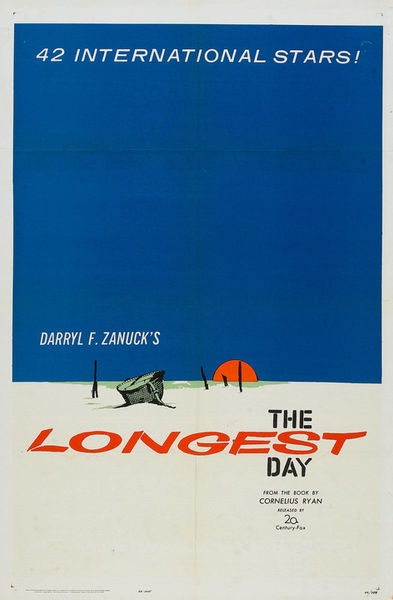
Figure X. Original theatrical poster for The Longest Day (1962). IMP Awards. http://www.impawards.com/1962/longest_day.html

Figure X. 1 of 4 theatrical posters for The Great Escape (1963). IMP Awards. http://www.impawards.com/1963/great_escape.html
Bill was interviewed for a WWII: GI Diary episode Epi. #14 - 19440825 Paris: An American In Paris which aired in 1978. Of the three soldiers featured, Bill is the only officer. Also, he is the only one from the South. The program provided the voice actors and designed the perspectives of each soldier through stylistic choices in the voice acting. Bill's accent left little doubt that he was from North Carolina. Between the accent and the alignment of the stories. His contribution to this televised narrative as that he bought a tourist's map of Paris to find a French Resistance organization near Notre Dame. He didn't touch the French wine and spirits so he could react with a clear head if someone shot at him. The crowning narrative fragment is how he set up his headquarters team in what used to be a (then deserted) brothel.
Ephemera Feeds the Family Tree
Both Uncles survived the breach of Fortress Europe, participated of the liberation of Paris using pre-war Michelin road maps and tourist guides, fought in the Ardennes-Alsace campaign and continued to fight into Germany. Bill was severely wounded by a land mine in October 1944. Roy was captured near Bastogne in December 1944 after German armor and infantry forces were able to advance against understrength pockets of American forces. Infantry were out of ammunition and without air support due to poor weather that grounded allied air cover. Both returned home, both were reluctant to share, but ephemera like the Record and other fragments served as vital points of entry.


Removed from the war by more than two decades, my Brother and I would face reoriented renditions of these and related stories depending on complaints raised and weaknesses my Brother and I displayed. The narratives and ephemera varied depending on whose house we were in at the time. Imagine complaining about having to eat boiled okra and fried chicken gizzards when your family is locked-and-loaded with stories about Roy almost starving to death while being worked to body-crippling exhaustion to clear twisted German rails, debris, and bodies following Allied bombing raids. I still remember the story about a solitary potato that fell off a passing German farm truck that Roy was able to retrieve and hide while being force marched to another work location. He shared that abundance with a fellow POW, and his best friend, Vincent Acri (Figure X, far left). All this accomplished after having witnessed other prisoners killed by German guards for lesser offences.
Figure X: ADD.

Figure X: Roy and Vince Acri were captured after holding their position until all ammunition was expended.
View from the Top
While other copies of “His Service Record” survive (I check online ephemera outlets regularly for examples), I’ve also noticed the absence from Hickory Publishing (as well as other publishers of service record books) of a “Her Service Record” collection. War’s destruction has never been isolated to men or uniformed combatants. The perception that war is a man’s domain still lingers today. America’s war narratives in general, and fighting specifically, have been gendered long before WWII. These products (narrative starter kits) by design focused on a male audience, or at a minimum, a male-focused subject for veneration by family members.
Interestingly, some ephemera publishers during WWII did see the opportunity to create a wider customer base through more generic (less participatory) texts such as Saalfield Publishing Company’s “Victory Scrapbook: Keep A record of America at War.” This format provided a colorful cover with blank pages for almost any form of engagement. Saalfield Publishing produced children’s activity books, paper dolls, and other high engagement works prior to the war. Of the surviving examples I’ve seen of the “Victory Scrapbook,” they are typically covered with news clippings, but I’m confident many others are filled with sketches, quotes, notes, and other interactions.
Official and ephemeral sources from WWII evidence women’s service as not only skilled mechanics, formidable industrial workers, and visionary trailblazers, but also served as fearless pilots, covert operations experts, and unflappable leaders during the chaos of combat (please read the “Women in War” Appendix, including embedded links to outside ephemera sources). Volunteers all, women sought out hazardous duty to serve and sacrifice in a common effort to win the war. WWII opened opportunities for women to help shape the top-down narrative. For example, Colonel Oveta Culp Hobby, selected to organize and lead 150,000 women volunteers for the Women’s Army Corps (WAC) during WWII, encapsulated this contribution best: “Women who stepped up were measured as citizens of the nation, not as women… This was a people’s war, and everyone was in it.”
Soon after the war, General Eisenhower shared this top-down assessment of the performance of WAC officers and enlisted: “When this project was proposed in the beginning of the war, like most old soldiers, I was violently against it. [...] Every phase of the record they compiled during the war convinced me of the error of my first reaction. In tasks for which they are particularly suited, Wacs are more valuable than men, and fewer of them are required to perform a given amount of work. [...] In the event of another war, which would be even more truly global than the last in its effects upon the entire population, it is my conviction that everybody in this country would serve under some form of call to duty.”
Annie’s service, though not part of the prevailing top-down narrative, was equally essential. She was an unyielding and courageous architect of harmony. She harnessed and stabilized three dimensions of the war at once. From the start, she nurtured family and friends into resilient and hopeful caregivers during homefront uncertainty, scarcity and fear. She then tethered Roy to Kannapolis, NC while he was experiencing the disorienting gravity of training, deployment, and then combat. She was steadfast as the family’s source of hope as conflicting official fragments (missing in action notices, POW status cards, etc.) levied complications and stressors on the entire family.
After twisting my ankle as a teen while on a walk with my Dad through the woods of north Georgia, I hopped and groaned to a stop. My Dad shared how he had to finish a high school football game with a sprained ankle because his team had only 11 players, no replacements. He then shared what helped him through his pain, remembering how his brother Bill survived a sprint off a roiling landing craft ramp to then charge up into Normandy Beach's kill zones. The subtext I then generated was always to weigh and balance pain (really any form of suffering) against the exemplars in our family’s pantheon of sacrifice. Bill (not by choice) was the centerpiece of this shrine of epic family lore with Roy (similarly avoiding any limelight) positioned nearby. Bill had survived losing a leg to a landmine and losing his other leg due to infection and complications, resulting in a double amputation. He wore prosthetic legs and was never seen in public without being prepared to stand unassisted and greet someone with a handshake. At times when Bill was surrounded by family and close friends, he would sit and relax, releasing his artificial legs to hit the floor to ease pressure from his stumps. As young kids my brother and I would then seize his legs and take them for a walk around the living room. Uncle Bill always smiled.
Living in the shadow of heroes carries weight and consequences. My father, too young to enlist, certainly felt it. He worked hard at every turn and opportunity to bring success and tribute to a family table full of heroes and survivors. It influenced me too. I leaned heavily into military service, which I prepared for during high school. During my basic cadet military training, I was sprinting across an obstacle course (this seems better portrayed in my head than in real life) when my left foot failed to clear a wooded beam. The impact broke my big toe. The pain was bearable, and I remained quiet about it until many years later when it was noted by a doctor completing my military end-of-service retirement medical evaluation. Don’t complain, push through pain, which was a common mantra for my family. I would argue it was an overarching vibe for Generation X. Those are some of the stories that trickled down from first and second-hand interactions with war survivors. These types of interactions are common for my generation. Another example (quick WLA advert before continuing) is John Guzlowski’s works focused on growing up with parents who were survivors of Buchenwald.


Modern Penelope: War's Echoes Follow Odysseus Home
Annie’s participation was far different but equally harrowing as the stories I grew up listening to from combat veterans. She experienced each one of Roy's wounds. She comforted him, waking him from dark dreams that lured him back to the Hurtgen Forest, Bastone, and the POW camps. She struggled with and for him as the almost nightly recalls to front lines provoked Roy to shout, punch, and kick in his sleep against long-dead enemies in efforts to save long-lost friends. Although bruised and exhausted from near nightly skirmishes, Annie's steady voice, strength of character, and caress gave her husband sanctuary from the images and voices he could not control. Gen. Eisenhower would agree that this too was wartime service—"[a] form of call to duty.”
Many women on the homefront were the skilled translators and narrators of family members’ outbound expeditions, emotionally and physically draining odysseys, and their return home years later. Their care was more than a collection of moments for the “Record.” Even so, these collections of fragments were also a way for these survivors to evaluate wounds to flesh and faculties based on each letter, postcard, and photograph. These fragments were coded warnings of how fierce battles fought abroad would be fought again at home. Even for those serving under virtuous and victorious banners, they too must struggle with the voice of their consciences...or in some way learn to calm or control it. Veterans needed help in this conflict. Annie volunteered without hesitation, compensation, or top-down recognition.
Edward W. Wood Jr., a featured WWII combat veteran in this volume, addresses this journey of recovery in On Being Wounded. He shares the critical healing that could only take place upon returning home: "Wounded, bitter, infuriated, I was unable to find any understanding inside myself, [...] So I found it in my mother. She made a cave for me with her strong arms, and I crept deep within it. [...] I let her caress my pain, her maternal love becoming my source, my strength, holding back the night and its harsh terrors, the memory of my fear.” Even now, victims' spouses, partners, families, and friends continue to wrestle with these terrors as they help survivors cope and return to lives of meaning. The struggle to salvage humanity stripped from survivors has been too often neglected, given a medical disability code, and left without even a pro forma scaffolded participatory narrative to follow other than telling veterans to dial 988 and press 1.
Stories like Roy and Annie’s invite participation, reflection, and community. Each additional thread of connective tissue helps to form future networks that provide stability in a world that is always fragmenting, personified entropy. Through these mechanisms of self-disclosure, social validation, and social cohesion we gain a path forward. Ephemera, bottom-up details of everyday survival, help others to build context, awareness, and resilience. Annie lived almost a decade after Roy’s passing. She not only struggled with the war as a wife, mother, and leader in her family but also as a shock absorber and emotional bridge between Roy’s traumatic experiences and the healthy development of their three amazing children. She too served, suffered, and shared, which fed and enriched our family tree.
Ephemera Eludes Complete Erasure
The modified TOC cover is my minor, ephemeral, bottom-up contribution to Annie and Roy’s war story. I encourage you to read the entire WLA Volume (yes, one last plug) to see the fragments that artists, poets, and authors across all genres use to provide a glimpse into war, survival, and struggle to reconnect with the society that sent them to fight. Look for fragments and ephemera of your own family’s stories of survival. We are at crossroads where military service is not only a much smaller portion of the population but also the surviving messengers and fragments with key lessons and warnings (veterans of WWII, Korea, and Vietnam) are passing away at increased rates. Let's capture as many of these fragments as possible to broaden empathy, understanding, and awareness. Works like WLA help in this catch, publish, and release process of these narratives.
If nothing else, please compare the bottom-up stories to the top-down narratives. If nothing else, ask the “why” question. This is not only a critical way to learn more about key influences in your life, but it also challenges a comparison of your story, as shaped by a wide range of official and family fragments. From the culturally-constructed narratives built over time...to those that appear ex nihilo shifting with each news cycle, question what's actually at the base of the foundation.
I close this mixed genre work that was sparked by a look back at a cherished piece of WWII and family ephemera by challenging you to find the people of strength, military veterans or civilians, that helped to stabilize you from fragmentation, helping you to convert the churn of life into a foundation of understanding. If they are no longer able to share their messages with you, look for the ephemera of their journeys and trials to experience the art that remains alive in expendable messages and mediums that, as Samuel Johnson shared 275 years ago, "have uses more adequate to the purposes of common life than more pompous and durable volumes."
With gratitude to the many men and women who have gone before, whose strength, courage, legacy, and lore (and ephemera) continue to guide and inspire.
References
[1] Geheran, Michael. “Selective Service Act.” In 1914–1918-Online: International Encyclopedia of the First World War, edited by Ute Daniel, Peter Gatrell, Oliver Janz, Heather Jones, Jennifer Keene, Alan Kramer, and Bill Nasson. Berlin: Freie Universität Berlin, October 8, 2014. https://doi.org/10.15463/ie1418.10414.
[2] “Induction Statistics.” Selective Service System, https://www.sss.gov/history-and-records/induction-statistics/.
[3] Geheran, Michael. “Selective Service Act.”
[4] Geheran, Michael. “Selective Service Act.”
[5] Chambers, John Whiteclay, II. To Raise an Army: The Draft Comes to Modern America. New York: Free Press, 1987
[6] Levi, Margaret. “The Institution of Conscription.” Social Science History, vol. 20, no. 1, 1996, pp. 133–67. JSTOR, https://doi.org/10.2307/1171506.
[7] Mosse, George L. The Nationalization of the Masses: Political Symbolism and Mass Movements in Germany from the Napoleonic Wars through the Third Reich. New York: H. (Howard) Fertig, 1975.
[8] The National WWII Museum. “Research Starters: U.S. Military by the Numbers.” The National WWII Museum. https://www.nationalww2museum.org/students-teachers/student-resources/research-starters/research-starters-us-military-numbers.
[9] “Induction Statistics.” Selective Service System, https://www.sss.gov/history-and-records/induction-statistics/.
[10] Brewer, Susan A. Why We Fight: Propaganda and the United States Government from World War I to the War on Terror. New York: Oxford University Press, 2009.
[11] Taylor, Philip M. Munitions of the Mind: A History of Propaganda from the Ancient World to the Present Day. Manchester: Manchester University Press, 1995.
[12] Chambers, John Whiteclay, II. To Raise an Army: The Draft Comes to Modern America. New York: Free Press, 1987.
[13] Brewer, Susan A. Why We Fight: Propaganda and the United States Government from World War I to the War on Terror. New York: Oxford University Press, 2009.
[14] “Induction Statistics.” Selective Service System, https://www.sss.gov/history-and-records/induction-statistics/.
[15] U.S. Department of Veterans Affairs. “Korean War Veterans.” Veterans Benefits Administration. https://www.benefits.va.gov/persona/veteran-korea.asp.
[16] U.S. Department of Veterans Affairs. “Vietnam War Veterans, and Honoring All Who Served: Memorial Day 2021.” VA News, May 31, 2021. https://news.va.gov/89450/vietnam-war-veterans-honoring-served-memorial-day-2021/.
[17] Oktaviana, A. A., et al. "Rock Art from at Least 67,800 Years Ago in Sulawesi." Nature, vol. 650, 2026, pp. 652–656. Nature Publishing Group, https://doi.org/10.1038/s41586-025-09968-y.
[18] "Lascaux Cave." Archeologie.culture.fr, Ministère de la Culture, https://archeologie.culture.gouv.fr/lascaux/en.
"The Chauvet-Pont d'Arc Cave." Archeologie.culture.fr, Ministère de la Culture,
https://archeologie.culture.gouv.fr/chauvet/en.
[19] Lohmann, Polly. “What the Graffiti of Ancient Pompeii Teach Us About Our Modern Selves.” De Gruyter Conversations, 18 Jan. 2018, https://blog.degruyter.com/graffiti-ancient-pompeii-teach-us-modern-selves/.
[20] Lohmann, Polly.
[21] Lohmann, Polly.
[22] Lohmann, Polly.
[23]https://sites.lsa.umich.edu/schironi/wp-content/uploads/sites/259/2020/08/06_homeric_scholia.pdf
[24] Miller, Carolyn R., and Dawn Shepherd.“Blogging as Social Action: A Genre Analysis of the Weblog.” Into the Blogosphere: Rhetoric, Community, and Culture of Weblogs, 2004, University of Minnesota Libraries, p. 2. https://conservancy.umn.edu/items/e3128b2d-e61b-4f69-bf16-d7d3f163f5ff.
[25] Miller, Carolyn R., and Dawn Shepherd, p. 14.
[26] Miller, Carolyn R., and Dawn Shepherd, p. 15.
[27] Kempshall, Chris, and Catriona Pennell. “Introduction: Wartime Ephemera and the Transmission of Diverse Family and Community Histories.” Genealogy, vol. 8, no. 3, 2024, article 114, p. 1, https://www.mdpi.com/2313-5778/8/3/114.
[28] Garner, Anne. “State of the Discipline: Throwaway History: Towards a Historiography of Ephemera.” Book History, vol. 24, no. 1, 2021, pp. 244-245. Johns Hopkins University Press, https://doi.org/10.1353/bh.2021.0008.
[29] Garner, Anne. “State of the Discipline,” p. 245.
[30] Garner, Anne. “State of the Discipline,” p. 245
[31] Johnson, Samuel. “No. 145. Petty Writers Not to Be Despised.” Samuel Johnson's Essays, 6 Aug. 1751, www.johnsonessays.com/the-rambler/no-145-petty-writers-not-to-be-despised/.
[32] Vintage 1942 Victory Scrap Book Keep a Record of America at War. 1942, Saalfield Company. WorthPoint, www.worthpoint.com/worthopedia/vintage-1942-victory-scrap-book-keep-4072814133.
[33] Saalfield Publishing Company Publications. Special Collections and Archives, Kent State University Libraries, www.library.kent.edu/special-collections-and-archives/saalfield-publishing-company-publications. [library.kent.edu]
[34] Victory Scrap Book: Keep a Record of America at War. Saalfield Publishing Company, 1942. AbeBooks, listed by Bailey Books, www.abebooks.com/Victory-Scrap-Book-Keep-Record-America/32019535728/bd. Accessed 22 July 2026.
[35] “Oveta Culp Hobby Papers.” Rice University Digital Collections, Fondren Library, Rice University, https://digitalcollections.rice.edu/medical-humanities/oveta-culp-hobby-papers.
[36] Hobby, Oveta Culp. “Women Who Stepped Up Were Measured as Citizens of the Nation, Not as Women… This Was a People’s War, and Everyone Was in It.” Memorial Quotations and Inscriptions, National Park Service, U.S. Department of the Interior, 14 May 2020, https://www.nps.gov/wwii/learn/historyculture/memorial-quotations.htm.
[37] Treadwell, Mattie E. The Women's Army Corps. Center of Military History, United States Army, 1991, p. 748, https://history.army.mil/portals/143/Images/Publications/catalog/11-8.pdf.
[38] “Cornelius Ryan WWII Papers, Box 014, Folder 04: William L. Mills, Jr., Page 3.” Cornelius Ryan Collection of World War II Papers, Ohio University Libraries, Mahn Center for Archives and Special Collections, https://media.library.ohio.edu/digital/collection/p15808coll15/id/17997.
[39] Wood, Edward W., Jr. On Being Wounded. Fulcrum Publishing, 1991. p. 82.
[40] “How to Teach WWII: The War's Impact on American Women.” The National WWII Museum, 17 Mar. 2026, https://www.nationalww2museum.org/war/articles/how-teach-wwii-wars-impact-american-women.
[41] "The Bravery of Army Nurse Annie G. Fox at Pearl Harbor." National Women's History Museum, 5 Dec. 2016, www.womenshistory.org/articles/bravery-army-nurse-annie-g-fox-pearl-harbor.
[42] National Archives and Records Administration. “Annie G. Fox.” A People at War, National Archives, https://www.archives.gov/exhibits/a_people_at_war/women_who_served/annie_g_fox.html.
[43] National Cemetery Administration. “Annie G. Fox (1893–1987).” U.S. Department of Veterans Affairs, https://www.cem.va.gov/docs/wcag/history/Remembering-Pearl-Harbor-WWII-Veterans.pdf
[44] “Annie G. Fox, First Lieutenant, U.S. Army.” Foundation for Women Warriors, https://foundationforwomenwarriors.org/annie-g-fox-first-lieutenant-u-s-army/.
[45] Dudley, Margaret. “Angels of Bataan.” National Museum of the Pacific War, 26 Apr. 2024, https://www.pacificwarmuseum.org/learn/articles/angels-of-bataan.
[46] Hanink, Elizabeth. “Angels in Hell: The Nurse POWs of Bataan and Corregidor.” Working Nurse, 6 Aug. 2018, https://www.workingnurse.com/articles/Angels-In-Hell-The-Nurse-POWs-of-Bataan-and-Corregidor/.
[47] Central Intelligence Agency. “Virginia Hall: The Courage and Daring of ‘The Limping Lady.’” CIA Stories, 29 June 2017, https://www.cia.gov/stories/story/virginia-hall-the-courage-and-daring-of-the-limping-lady/.
[48] “Virginia Hall.” The National Archives (UK), https://www.nationalarchives.gov.uk/explore-the-collection/stories/virginia-hall/.
[49] United States Army Military Intelligence Hall of Fame. “Miss Virginia Hall (Deceased).” U.S. Army Intelligence Knowledge Network, https://www.ikn.army.mil/apps/mihof/biographies/hall,%20virginia.pdf.
[50] “Virginia Hall MBE Medal Award.” International Spy Museum, https://www.spymuseum.org/exhibition-experiences/about-the-collection/collection-highlights/virginia-hall-mbe-medal-award/.
[51] Johnson, Samuel. “No. 145. Petty Writers Not to Be Despised.” Samuel Johnson's Essays, 6 Aug. 1751, www.johnsonessays.com/the-rambler/no-145-petty-writers-not-to-be-despised/.
40


